Tired of:
✓ Counting calories ✓ Weighing food ✓ Feeling guilty about eating ✓ Yo-yoing between "diet" and "cheat day"
You're not alone. The problem isn't your willpower—it's your approach. The One-Plate Method isn't about grams, but about a smart relationship with food. It's not a diet; it's an eating framework.
Support your health journey with body-mind alignment principles,
The Only Rule: Imagine Your Plate Divided
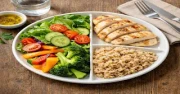
For each main meal (breakfast, lunch, dinner), visualize your plate divided like this:
1. First Half (50%): "What Grows from the Ground"
Vegetables of different colors—raw or cooked doesn't matter, volume does.
Why: Fills your stomach with fiber and vitamins with few calories. Natural foods satisfy naturally.
2. First Quarter (25%): "What Moves on the Ground"
Protein: chicken, fish, eggs, legumes, meat.
Why: Builds muscle, keeps you full longer, stabilizes blood sugar.
3. Second Quarter (25%): "What Gives You Energy to Move"
Carbs: rice, bread, potatoes, pasta—preferably whole grains.
Why: Gives you fuel for daily activity, prevents hunger in 2 hours.
Why This Works in Real Life
1. No Scale Needed: Eyeballing portions is enough.
2. Works at Restaurants & Home: Order a large salad + protein + reasonable carb portion.
3. No Deprivation: If you want dessert, have it after finishing your main plate (you'll naturally eat less).
4. Flexible for Social Events: At gatherings, focus on filling half your plate with vegetables first.
Real People, Real Results
Sarah (Busy Mom): "I used to eat my kids' leftovers. Now I prepare 'mom's plate' first: big salad + grilled chicken breast + small bread. Lost 15 lbs in 4 months without hunger."
David (Office Worker): "Lunch out was a disaster. Now I order: large tuna salad (veggies+tuna) + piece of bread. Energized all afternoon."
Maria (Loves Cooking): "Instead of calculating calories per recipe, I ensure half the plate is cooked vegetables, quarter is meat, quarter is rice. Family is happy, I'm at peace."
The Mindful Layer: Eating as Relationship, Not Math
When you eat while counting, you're in your head. When you eat while feeling, you're in your heart. Before eating, ask: "What does my body truly need now?" While eating, notice: "How does each bite feel?" After eating, thank: "Thank you for this food that keeps me alive."
This shift from "the number on the scale" to "the feeling in your body" is the essence of sustainable health.
Support your health journey with identity-based habit change,
7-Day Start Guide (No Shock)
Day 1-2: Focus only on the vegetable half. Increase veggie portions at each meal.
Day 3-4: Add protein. Ensure it's in at least two meals.
Day 5-7: Arrange the full plate. Practice eyeballing portions.
After Week 1: Notice: How do you feel? How's your energy? How do your clothes fit?
Real-World FAQ
Q: What about snacks?
A: Fruit, yogurt, a handful of nuts. Something small that addresses hunger without disrupting the system.
Q: What if I have a heavy meal?
A: Normal. Just return to the method at the next meal. Life isn't perfect.
Q: Will I lose weight?
A: Most likely, because you're naturally full from real food. But the main goal: better health and a peaceful relationship with food.
Support your health journey with sustainable productivity habits.
Conclusion: Food Is a Friend, Not an Enemy
Your intelligent body knows what it needs if you give it clear signals. The One-Plate Method returns you to your natural intuition. Stop fighting food, and start having a gentle conversation with your body.
💬 Your Next Plate: At your next meal, try visually dividing your plate before eating. What did you notice about your fullness and mood afterwards? Share below.
Join the conversation